My Trip to China
August 20, 2009 by admin
Filed under Recent Posts
China: A Lesson in Transformation
Several times during my EHM tenure in the 1970s I stood on a hill in the New Territories outside Hong Kong and peered into China, a mysterious country I was not allowed to enter. China was locked behind a wall of secrecy. About all most of us knew was that the country was in shambles due to Mao’s Cultural Revolution.
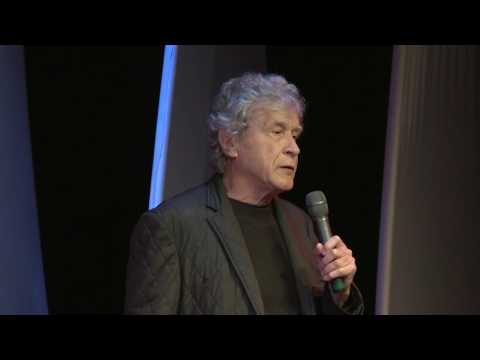
I finally had the opportunity to visit China in June 2009.
No one back in the ‘70s believed that any country could sustain double digit economic growth for more than a couple of years and under no circumstances for a decade.
China accomplished the impossible. And then it did it again. And again. China’s economy mushroomed by an estimated ten-fold. In three decades, the most populous nation on the planet rose from the depths of poverty to become the symbol of what human determination – and capitalism – can accomplish.
We in the US seem to want to focus on China’s problems. People constantly point out the negatives, like its greenhouse gas levels recently surpassed ours (although on a per capita basis our emissions are five times greater than theirs). Driving toward my hotel in the modern Pudang district, I was certainly aware of the low-lying mist that I assumed was smog, but I have to say that I was most struck by something quite different: the profusion of trees. There were dozens of varieties of them, everywhere. Tall, short, deciduous, coniferous, some bursting with colors – red, pink, white, and yellow flowers – they covered a broad center strip that divided outgoing from incoming traffic, lined the sides of the highway, and stretched back as far as the eye could see. Many were tall; all seemed healthy – either naturally suited to the local conditions or pampered. Obviously planted, they were clustered in formations that brought to mind the formal gardens of Versailles. In addition to creating a most pleasant environment for mile upon mile, they performed another function, that of removing carbon dioxide from the air. It was my first inkling of China’s commitment to cleaning up its environment.
“Yes,” Mandy Zhang, an MBA student at the China Europe International Business School replied. CEIBS had brought me to Shanghai to speak at their Being Globally Responsible Conference and she was my host on my first evening at a restaurant near my hotel. “We are all very aware of the pollution our economic development has caused. We young people are especially determined to turn it around. Trees are one small part of the plan.”
Although the majority of the MBA students at CEIBS are Chinese, roughly 40 percent come from the United States, Europe, Latin America, and other parts of Asia. Their school was ranked among the top ten MBA programs in the world by the Financial Times in 2009 – along with Wharton, Harvard, Columbia, and Stanford.
Every time I asked them about the environment, the Chinese students agreed that cleaning it up was a priority. I was told again and again that it will happen. Economic growth had been the first goal; now the time had arrived to take care of the problems that rapid development had created. During the six days I was in Shanghai, the government announced that it would levy taxes against polluters, support a company that was developing electric cars by making plug-in stations available around much of the country, and offer rebates of approximately $4,000 (US) to customers who purchased those cars. “When the government says it will happen,” I was told time and again, “it will.”
The fact that roughly one sixth of the world’s population has turned itself so totally around in three decades signals hope for all of us. China is a land of many diverse cultures – ones that throughout history frequently fought each other; it has demonstrated the capacity we humans possess for uniting in order to realize a common cause.
Rather than fearing China or criticizing its pollution levels, we can draw on its remarkable example, encourage it to do better, and set our own goals of becoming greener than China at an even more rapid pace.
As my plane lifted off from Shanghai airport, I realized that my visit to China had inspired me with a new sense of hope. What a wonderful thing for all of us – and our children and grandchildren – if the new China motivates us in the US, and every other country, to compete to see who can become the most socially and environmentally responsible society on the planet.

Thank you Aaron.
Let me first thank you for your book “Confessions of an Economic Hit Man.” I just bought the book over the weekend and couldn’t put it down. I wish I had purchased it earlier, so I could have attended your presentation in China.
Again Cdinsky is Old Thinking, 62% of the worlds 20-30 year old’s are Chinese, (I have been asked to teach Green Technology at Ho-Hai University in Nanjing) So many of my Friends are into Green and Cleaning up the Planet (my Chinese VP is 24 and she is so wonderful), they are very much Ashamed of the “Cultural Revolution”, but Mao did write such Beautiful Poetry about his Country, but had no real Idea about what people want and what people are, Mr. Perkins is right about what he said about the lower people (the Pirates), but now there are 400,000,000 Middle Class Consumers in China, How many people are in the USA? Make the Parts in China, Assemble in the USA (giving us real work) and send the Completed Goods at a reasonable price to Africa (the real Africans are starting to own their country), They too deserve a lot Better then what the Old World gave them, Shafts are for Motors, Not People… bb
People are people all over the world. Chinese, Nigerians, Swedes, even the Dutch.
Corporations are supposed to be people but they’re not – they’re money grubbing soulless entities who exist for the bottom line. Nothing else. They’ll see you destroyed. Corporations don’t know they end up destroying themselves in the end.
No people, ESPECIALLY young people, want their world messed up. Stop.
And Dear Corps,
Quit being so evil bad. How many villas can your stockholders and owners buy? Yachts? Islands? Underground luxury bunkers? How many tortured duck pate and truffled luncheons can you have?
How ironic – you probably buy the best natural foods because they taste better while you foist chemical crappe on the rest of tawdry human debris…
With all that power, money, prestige, you still get old (until you start buying baby foetus organs and other wierdnesses) and then you end up looking back at what you’ve done, what you’ve wrought.
And your grand children, great grandchildren will be left with a world of exceedingly rich and destitute poor and a new indentured servant class. And soylent green most likely. Banquet’s Soylent Green with Gravy and Apple-ey Surprise. Good golly grief.
Sounds like crisis of future conscience in the making.
It’s MY world! Quit effing it up!
kthanks
BillyV is Old Thinking, having traveled to China 14 Times in the last 5 years, I have been watching China Change, I was personally asked by the Chinese Government to Help Clean Lake Taihu of her Algae Bloom Pollution Problem, My Algae experts are just waiting for the OK, but Mr. Perkins is closer to the facts because of his experience then M.E. Lilly and their closed thinking…
As the Tourists were walking up and Down the Great Wall, I just looked out the bus window and kept talking with the Bus Driver, the Tour Guide and the Small Gift Shop Owner, This was my very first trip in 2005, since then I am now connected into the High Government, The Scientific Community and into the New Power China and this also includes the (Scary) Military (Sheesh!!!), we all need a Boogyman, but mine is not China….. BingHuo (The name my Chinese Friends have given me)
M.E.Lilly is right on about China and what has transformed her. There is nothing admirable with regard to the methods the business and Party leaders have used and continue to use to achieve that growth. The cost in the environment is staggering and will continue. Mr. Perkins observations are terribly flawed and he needs to dig deeper into the soul of the movers and shakers. He directs us away from the pollution and expects that encouragement will change their habits. That is a naive assumption beyond any hope to understand the real China. The government will let the starrey eyed idealists plant their nice token trees to keep busy and direct attention away from the real issues while it is biz as usual.
Please do not hope that the US learns anything from the China model. It is flawed beyond imagination except to cite as an example how to successfully drag a country up from nothing and enrich a select few along the way at a terrible cost to the environment. To think it will change its behavior is simply unrealistic.